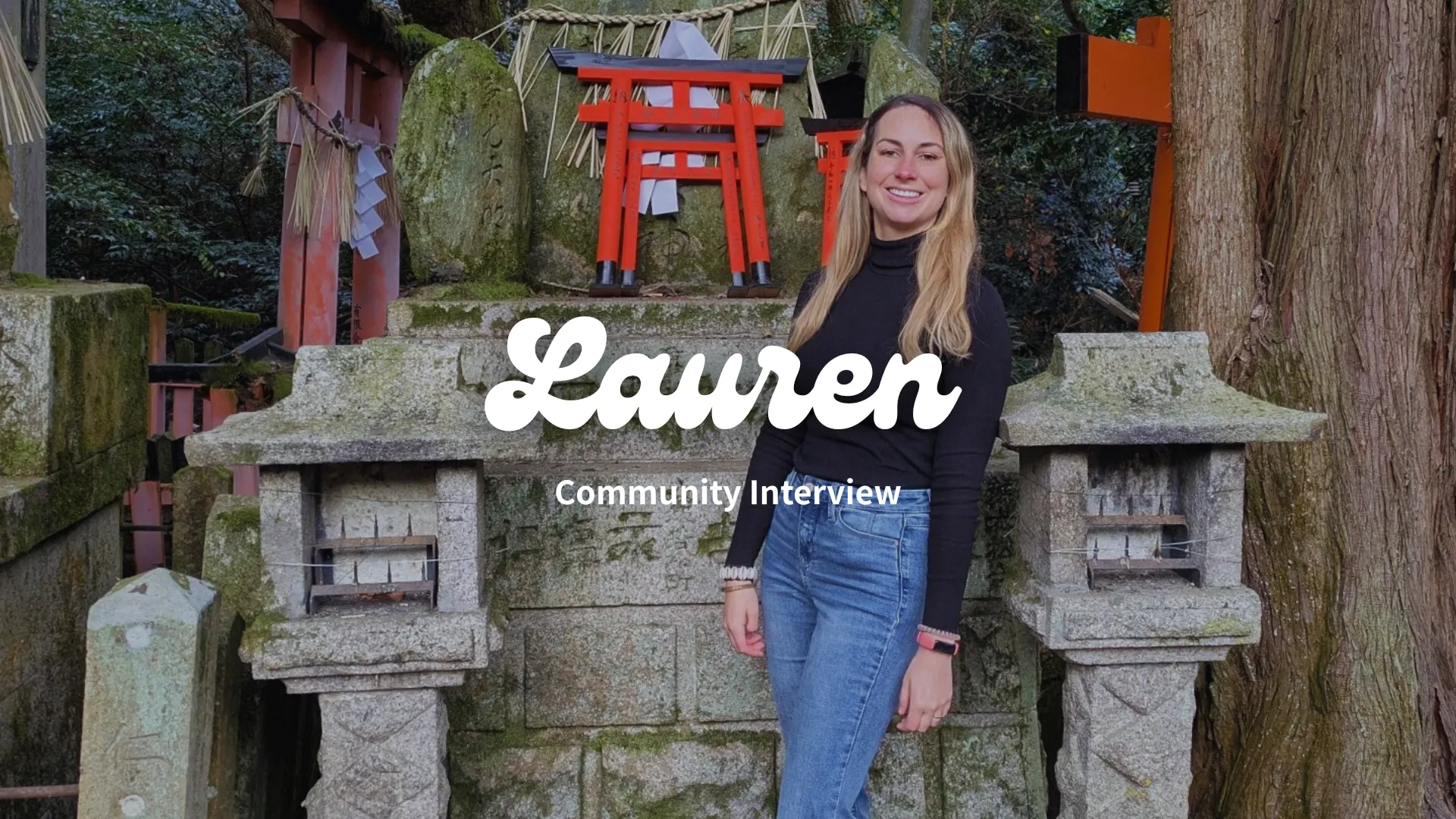
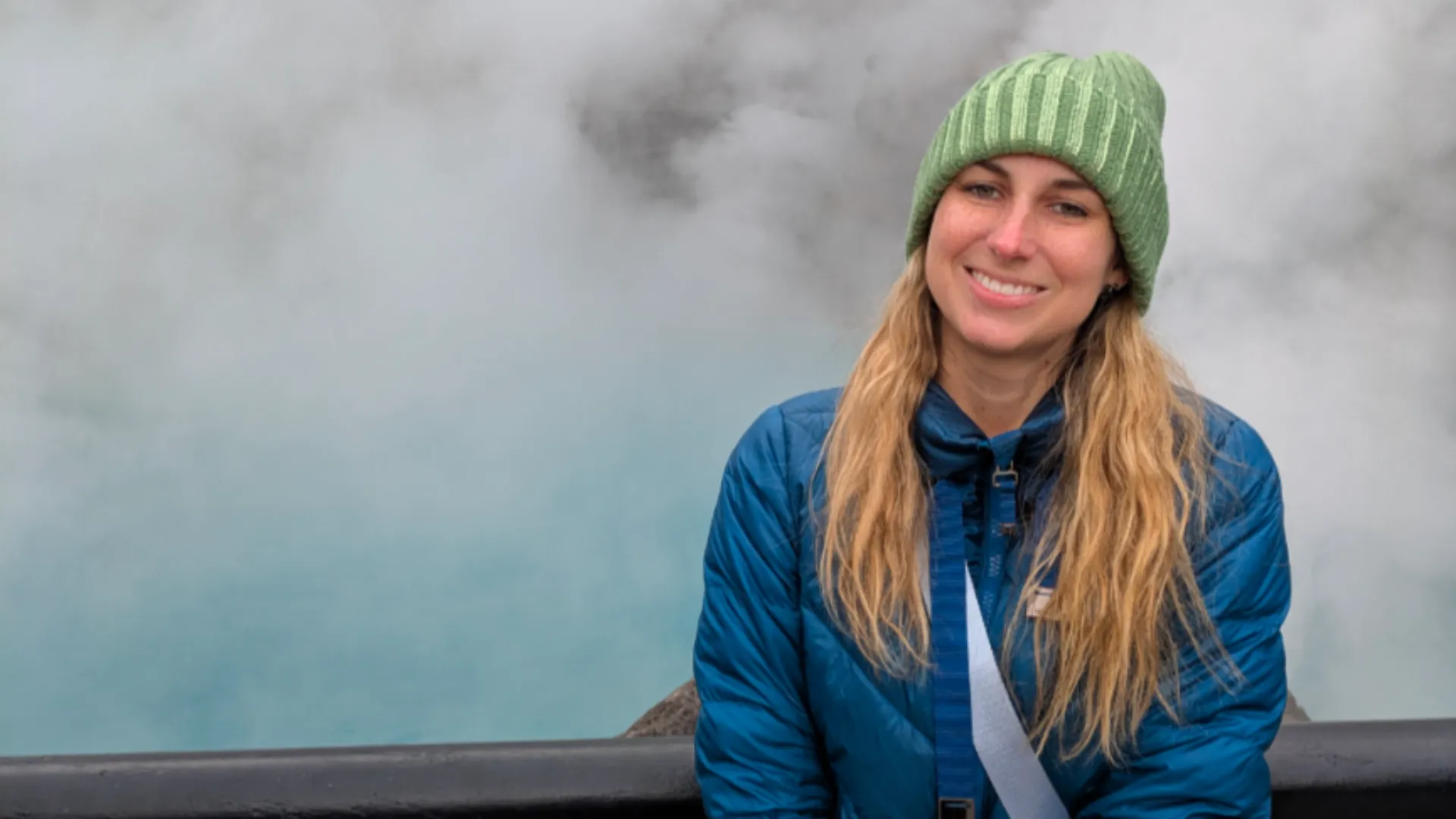
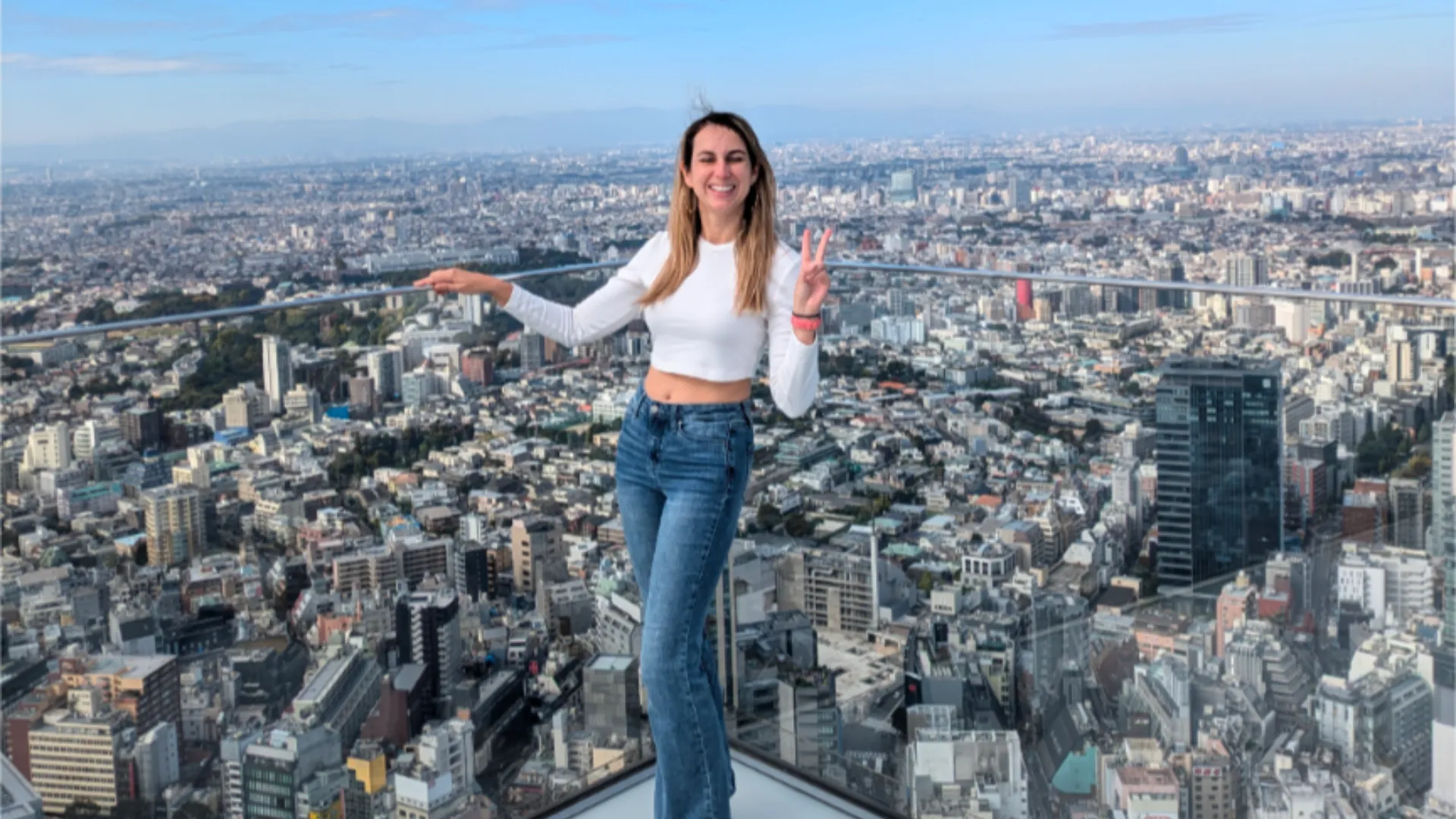
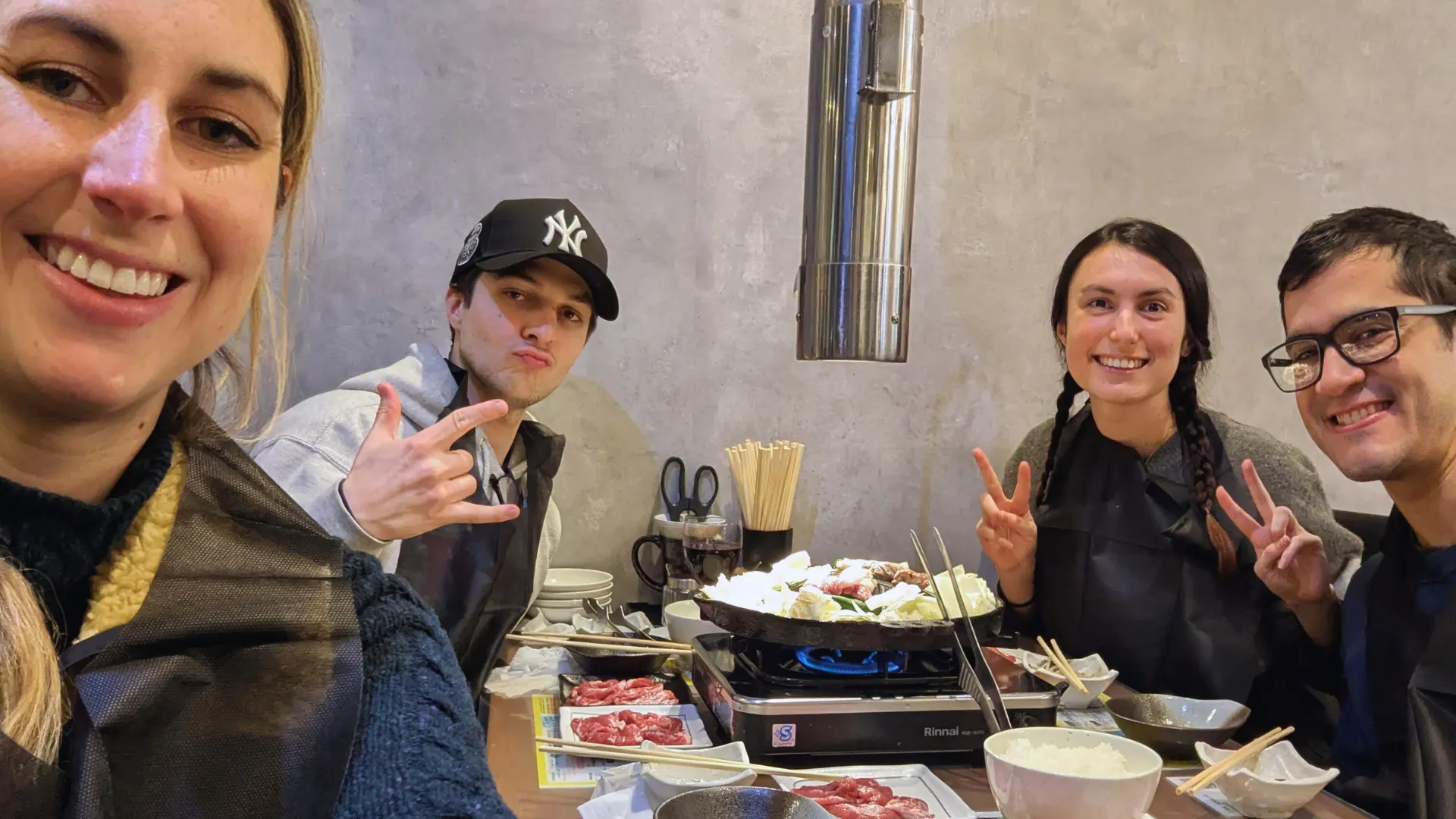
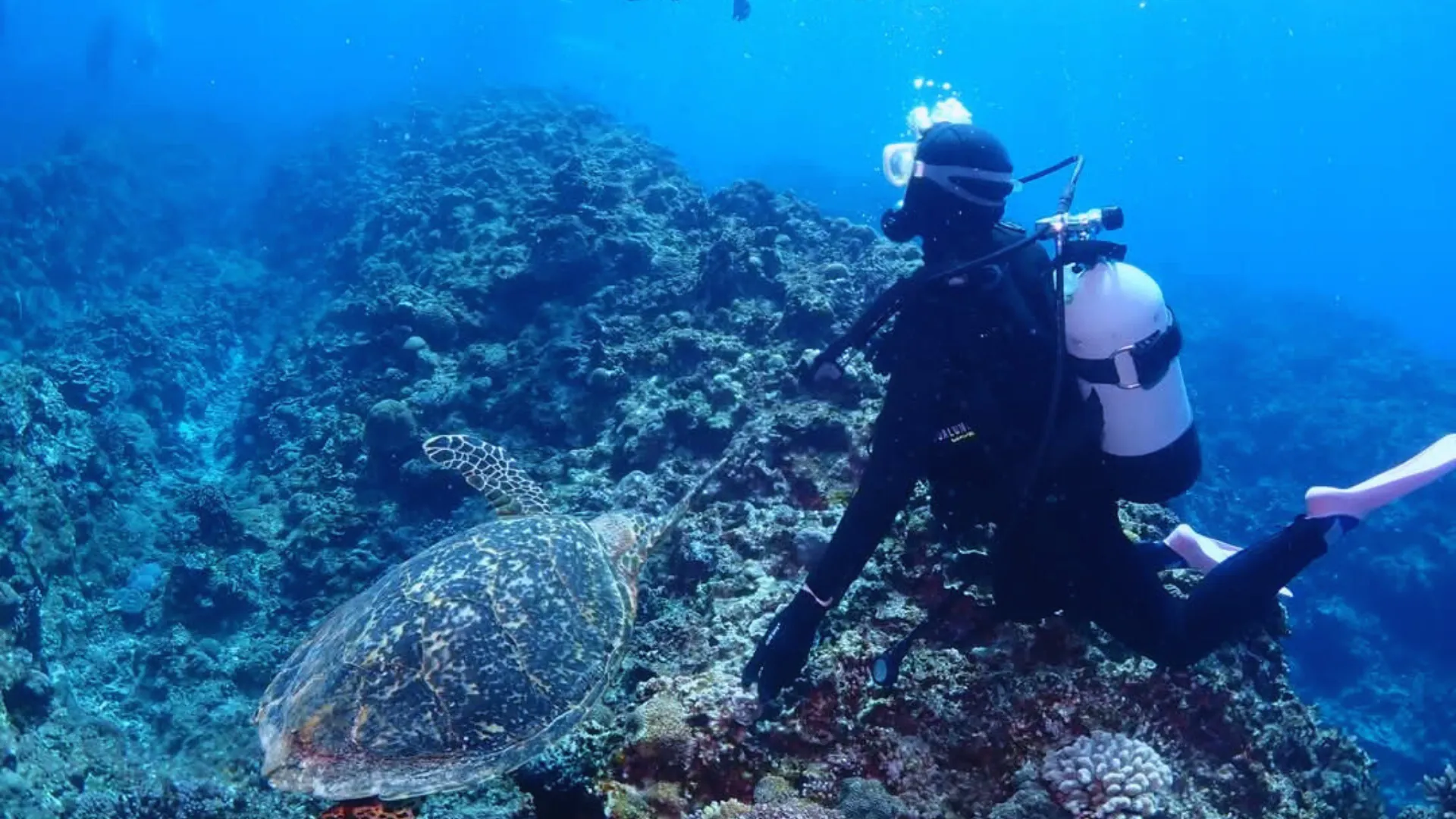
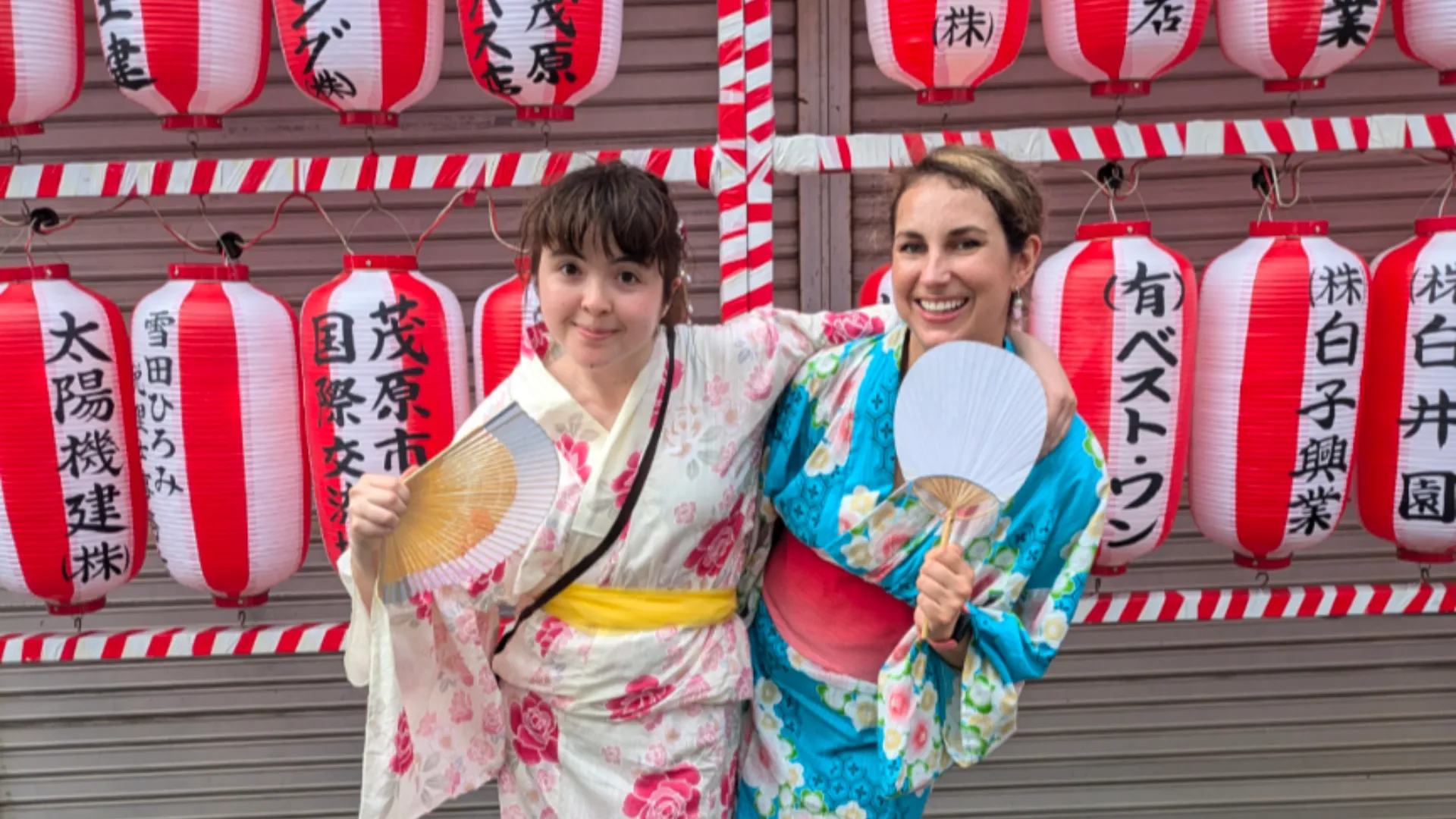
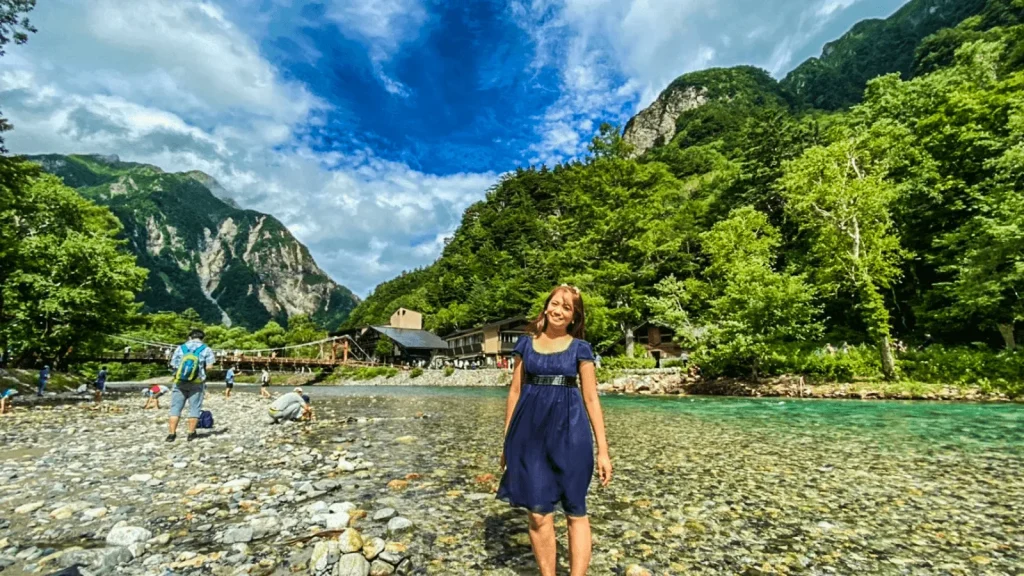
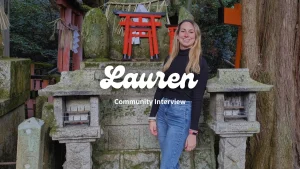
Meet Lauren, an ALT living near Narita who embraces slow travel through hiking, ramen hunting, crafts, and cultural discovery, exploring Japan’s prefectures, learning Japanese, loving youshoku, and chasing mountain trails while dreaming of languages worldwide.
Want to learn Japanese in Japan? Ask any questions! Apply with Travelife Japan to receive personalized guidance, application support, and a smoother enrollment experience.
TOC
Interview: Experiences in Japan
What Do You Do in Japan?
I am an ALT (assistant language teacher), teaching English in a high school. I also love traveling around the country, checking out new spots in Tokyo, and trying different foods. I would like to visit all prefectures in Japan and so far I am at 22/47.
I am trying to learn the Japanese language too, though it’s slow progression.
I like to hike and want to hike as many as the 100 famous mountains as a I can. I take weekend trips to hike various mountains in the surrounding Tokyo area. Most memorably was Mt Akagi in Gunma, last January. It was covered with snow and I didn’t have the proper supplies so did a bit of sliding down the mountain.
I rank bowls of ramen on a 5-tier scale, looking for those perfect #5 ramens (so far I’ve encountered two).
I like arts and crafts – drawing, collages, cross-stitch. Recently I took a haniwa-making class at a local museum and made two clay haniwa. I also like building plastic models and have been trying to make Digimon (which was one of my favorite shows as a child).
What Are You Interested in Japan?
I used to travel a lot but I thought it would be meaningful to experience “slow travel” and live in another country. Of places I’ve visited, Japan was one of my favorites and I felt that it had a lot to offer as an explorer. It also has ALT programs that make getting a job and moving abroad a bit easier.
I like Japan’s nature and aesthetics. I like their appreciation for cute things. There are always interesting things to see when out and about. I also like how culturally Japan is very different from the United States so there would be more cultural mysteries to discover. I feel like I have a better appreciation of the world and other people when I can understand differences better.
Why Do You Choose to Stay in This City?
I live close to Narita, in Chiba prefecture. I did not choose this, I was placed here by my company. I requested some proximity to Tokyo. It’s a good location as Tokyo can be easily accessed. It’s also small enough to feel homey.
And Narita’s downtown is a nice attraction, with the old buildings. I think the temple compound and park is one of the best in Japan and it’s hardly ever crowded. Narita also has some nice festivals and easy access to other historical towns such as Sawara. I just wish Chiba had more mountains.
Where is Your Local Recommendation in This City?
I recommend a walk from the train station down Omotesando Street. This street has many historic buildings and opportunities to buy souvenirs or Japanese crafts. Narita is famous for eel, unagi, so there are many eel restaurants. You can even watch the chefs butcher and cook the eels over the coals.
Omotesando Street has some good street food too, such as dango, chestnuts, honeycomb ice cream, dairy drinks from Yume Narita Dream Farm, or matcha snacks. You can also buy small bites of unagi if you don’t want to splurge on the whole meal. The street ends at Naritasan Temple, which is nice to see. Behind it is a park that has seasonal blossoms, meandering paths in the woods, a pond, and viewing pavilions.
Narita Ramen Street near the JR station, in the basement of a building, is also a good choice. Next to the Keisei station is a popular small Takoyaki stand. Some people tell me the Takoyaki there is better than that in Osaka.
What Do You Enjoy The Most While Staying in Japan?
I enjoy encountering cultural differences of things I never thought about. For example, like Japan’s culture of active listening. People make a lot of listening noises when you talk and on talk shows, people interrupt and it’s not seen as rude, just as listening, while Americans tend to be more silent active listeners.
Or like how there’s a culture of eating every last grain of rice and how it’s kind of rude to leave any behind. Because not just food waste but all the work the farmers took in producing that rice. And an old Shinto belief that there are 100 gods in every grain of rice. So if you’re at a restaurant and not that hungry, you need to specifically ask for a smaller portion of rice. I like learning random cultural differences like that.
I also like the cost of living is less, so I can go out to eat more often and travel around on the train without worrying about the expense too much.
What is The Biggest Challenge Being in Japan?
For me it is the language and bureaucracy. Sometimes having to fill out random forms or do things at city hall or the bank is a big challenge when I don’t understand what is being said to me. Sometimes I can ask for help and formulate a question in Japanese, but then it is answered in fast and complicated Japanese that I can’t understand. I say living in Japan is “life on hard mode.”
Also sometimes websites have terrible user interface that makes booking or arranging things difficult. I’ve permanently given up on ever buying shinkansen tickets online ahead of time and the Osaka expo website system was a hassle.
What are The Differences Between Japan & Your Country?
I notice that Americans boast a lot. This is seen as normal in America, to talk about yourself and show your achievements. But it seems rude seeing American bragging through the lens of Japan. Maybe this is exemplified with how you receive a compliment. In the USA, you say “thank you” while in Japan, you tend to dismiss the compliment or say something like “no no.”
Americans also tend to be louder in public, talking with their groups. Japanese people are more considerate in that way. I also notice in America, people are maybe more spatially alert. I see fewer people walking and being on their phones at the same time. In Japan, mostly everyone is walking and on their phone, especially in train stations, and there is not much spatial awareness.
What is Your Dream?
I’d like to travel to many countries and learn many languages. I’d also like to learn a lot about a few countries.
Favorite Japnaese(Anime / Artist / Song / Food / Movie)? Why?
My favorite Japanese food currently is youshoku. It’s called Western food in Japan, but it isn’t Western food like we’d know it in Western countries. It’s basically Western Japanese fusion and exemplary dishes are omurice, Hamburg steak, curry rice, and Naporitan spaghetti.
Many youshoku restaurants have homey vibes and are served as set meals by older people who have been running their restaurant for decades. Sometimes Japanese food tends to have subtle flavors and feels a little repetitive, so I like the variety of youshoku and its usually bolder flavors.
Travelife Japan Highlights
Lauren leaves a strong and memorable impression as someone who approaches life in Japan with sincerity, curiosity, and a quiet sense of joy. Rather than rushing through experiences, she fully embodies the idea of slow travel, taking the time to notice details that reveal the deeper layers of everyday life. Her reflections on cultural differences, from active listening to food values and social manners, show not only observation but genuine respect and thoughtful interpretation.
She balances curiosity with humor, describing life in Japan as “hard mode” while continuing to challenge herself through language learning, solo travel, and weekend mountain hikes. Her story of hiking Mt. Akagi in the snow, imperfectly prepared yet fully engaged, perfectly captures her adventurous and self-aware spirit.
Lauren’s enthusiasm for food, arts, and local culture adds a delightful warmth to her character. Ranking ramen, discovering the charm of youshoku, crafting haniwa, and building Digimon models reveal a playful creativity that makes her journey feel deeply personal. As an ALT, she contributes meaningfully to her community while continuing to grow alongside it. Overall, Lauren comes across as open-minded, resilient, and genuinely delighted by the process of learning, making her presence in Japan both enriching and inspiring.
あわせて読みたい
Best Japanese Language Schools in Japan 2026|Learn JapaneseWondering where to find the best Japanese language schools for an immersive learning experience? Dive into our guide to uncover Japan’s top institutions, where excellence in language education and cultural immersion combine, making it the perfect destination for anyone passionate about studying Japanese at its source.