Discover Kado in Japan, the traditional art of flower arrangement, its history, techniques, major schools, philosophy, and cultural significance as the mindful “Way of Flowers.”
Want to learn Japanese in Japan? Ask any questions!
Apply with Travelife Japan to receive personalized guidance, application support, and a smoother enrollment experience.
What Is Kado?
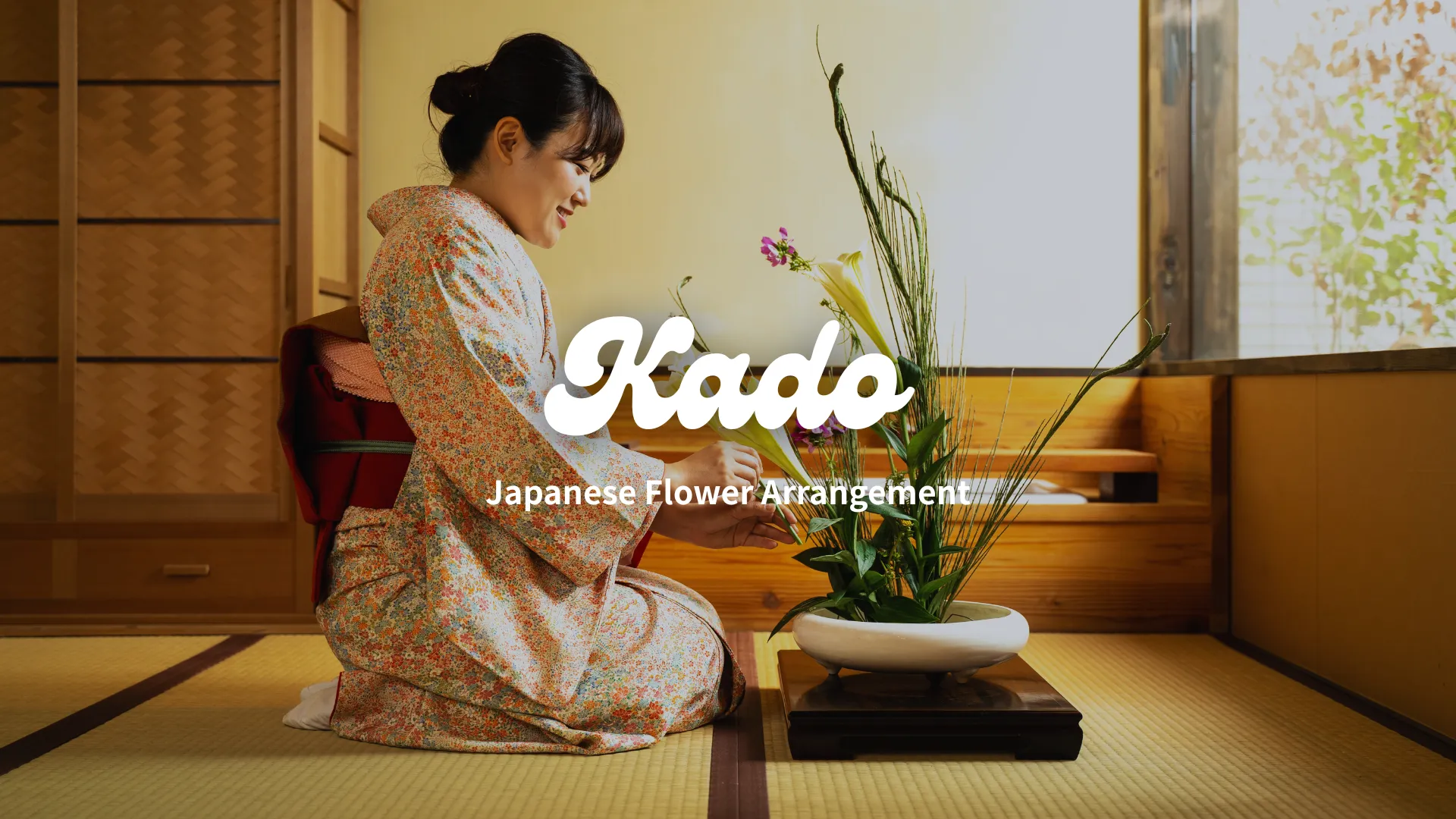
Kado, literally “the way of flowers,” is the traditional Japanese art of arranging flowers and plants into aesthetic compositions that express harmony, seasonal beauty, and respect for nature. The term Kado (華道) is another name for what many people know as Ikebana, but unlike ordinary floral arranging, Kado carries deep cultural, philosophical, and spiritual meanings rooted in centuries-old Japanese tradition.
The origins of Kado date back to early Japan following the introduction of Buddhism in the 6th century, when flowers were offered at Buddhist altars as symbolic tributes. Over time, this practice evolved from simple offerings into a structured art form that embodied aesthetic principles and spiritual contemplation.
During the Muromachi period (1336–1573), Kado began to flourish as a cultivated art, especially among aristocrats and later across Japanese society. The oldest formal school, Ikenobo, established in Kyoto, played a central role in developing the theories, styles, and principles that continue to shape Kado today.
Kado is not just about arranging flowers. It represents a cultural discipline where practitioners learn not only technical skills but also mindfulness, balance, and an appreciation for the fleeting beauty of nature. Unlike Western flower arrangements that often focus on symmetry and creating full displays, Kado emphasizes line, space, and harmony between materials and environment.

Kado Techniques, Schools, and Practice Style
Kado practice centers on selecting and arranging seasonal flowers, branches, leaves, and other natural materials in a way that conveys balance, rhythm, and mood. Practitioners consider not only the type of plant but also its direction, shape, and symbolic meaning.
There are multiple schools of Kado in Japan, each with its own philosophy and stylistic focus:
- Ikenobo School: The oldest and most traditional Kado school, emphasizing formal structure, symbolic meaning, and harmony among materials. Arrangements often reflect classical principles of heaven, earth, and humanity.
- Ohara School: Developed in the early modern era, Ohara emphasizes natural landscapes and garden-like compositions, often using techniques like Moribana that evoke fields and scenery.
- Sogetsu School: A modern and creative school that encourages freedom of expression and the use of unconventional materials, enabling innovative artistic interpretations.
Training in Kado involves learning basic techniques such as cutting, supporting stems with tools like kenzan (pin holders), and placing elements in a vessel so that they create a purposeful line and space. Unlike arranging many flowers to fill space, Kado arrangements often embrace minimalism, allowing negative space and individual lines to convey meaning and emotion.
Practice also includes etiquette and focused attention, encouraging practitioners to slow down, observe nature intentionally, and consider the essence of each plant material. This mindful approach reinforces the idea that Kado is as much about the arranger’s inner presence as it is about the final composition.
Kado Philosophy, Values, and Cultural Significance
Kado embodies core Japanese aesthetic values such as wabi-sabi (finding beauty in imperfection), seasonality, and harmony between humans and nature. The art emphasizes the individuality of each material, inviting students to perceive subtle qualities like line, form, space, and texture.
The philosophy of Kado is rooted in contemplative practice. Arranging flowers with intention requires patience, observation, and mental calm. Many practitioners describe the process as meditative, as it invites a deep connection with the present moment and an appreciation for the fleeting nature of life.
Respect for nature and life is central to Kado. Because materials are chosen according to season and symbolic meaning, the practice highlights the Japanese cultural reverence for the natural world and its cycles. Flowers are not merely decorative; they represent shared experiences of time, growth, and transformation.
Culturally, Kado holds an esteemed place as one of Japan’s classical arts of refinement, alongside chadō (the way of tea) and kōdō (the way of incense). Practicing Kado contributes to personal cultivation, aesthetic sensitivity, and an understanding of Japanese cultural heritage. Although deeply traditional, Kado continues to evolve, attracting global interest and modern interpretations while preserving its philosophical roots.

Conclusion
Kado, the Japanese “Way of Flowers,” is a deeply symbolic art form that blends aesthetic beauty, cultural tradition, and mindful practice. Rooted in centuries of history, it emphasizes harmony, seasonality, and spiritual awareness through intentional floral arrangement. Beyond mere decoration, Kado fosters patience, balance, and appreciation for the natural world, making it a meaningful cultural discipline that continues to thrive in Japan and beyond.
CONTACT US
For studying Japanese in Japan, please contact us.