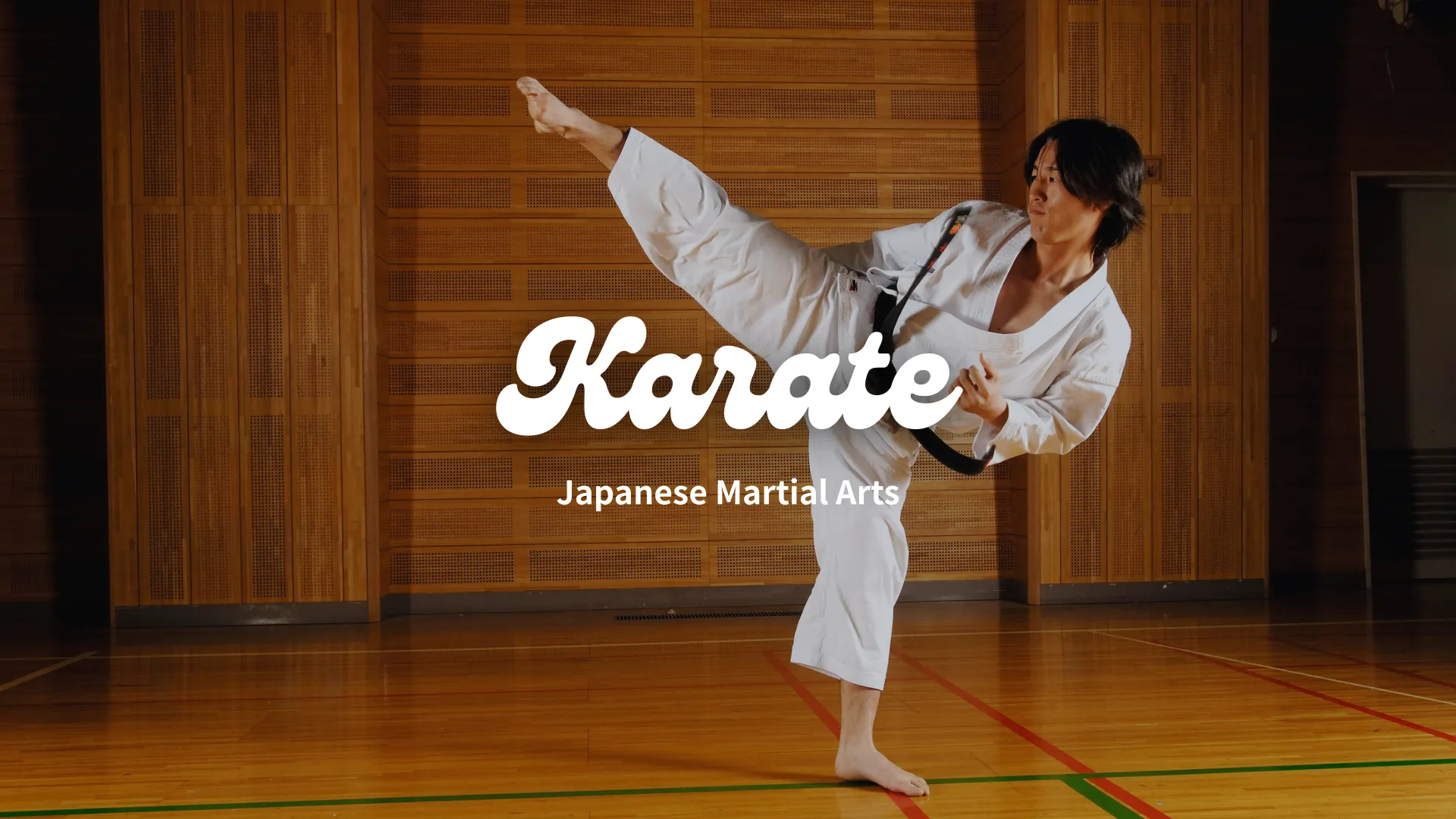
What is Karate? A complete guide to Karate in Japan, covering its history, techniques, training style, philosophy, and cultural significance.
Want to learn Japanese in Japan? Ask any questions!
Apply with Travelife Japan to receive personalized guidance, application support, and a smoother enrollment experience.
What Is Karate?
Karate is one of Japan’s most widely practiced and internationally recognized martial arts, known for its powerful strikes, disciplined movements, and strong philosophical foundations. Often translated as “empty hand,” Karate is a system of unarmed combat that emphasizes punches, kicks, blocks, and controlled body movement. While commonly associated with Japan, Karate originated in Okinawa, where it developed under unique historical and cultural conditions before being introduced to mainland Japan.
The roots of Karate can be traced back several centuries to the Ryukyu Kingdom, a maritime trading state that maintained close ties with China, Korea, and Southeast Asia. Okinawan fighting methods were influenced by indigenous combat practices as well as Chinese martial arts, particularly systems collectively referred to as quanfa. These influences merged with local techniques to form early unarmed fighting traditions.
A key factor in Karate’s development was the restriction on weapons imposed during periods of political control. Under these conditions, Okinawan practitioners refined methods of self-defense that relied entirely on the body. Over time, these techniques evolved into structured systems known as te, which later became the foundation of modern Karate.
In the late 19th and early 20th centuries, Karate was introduced to mainland Japan through educators and martial artists such as Funakoshi Gichin. During this period, Karate underwent significant transformation. Terminology was standardized, training methods were formalized, and philosophical elements were emphasized to align Karate with other Japanese martial arts such as Judo and Kendo. The name itself was reinterpreted from “Chinese hand” to “empty hand,” reinforcing its identity as a Japanese martial discipline.
Today, Karate exists in many styles, including Shotokan, Goju-ryu, Wado-ryu, and Shito-ryu. Despite stylistic differences, all forms of Karate share a common emphasis on discipline, respect, and the integration of physical technique with mental focus. Karate is practiced worldwide, both as a traditional martial art and as a modern competitive sport, yet its core principles remain deeply rooted in Japanese and Okinawan culture.

Karate Techniques, Rules, and Training Style
Karate is primarily a striking-based martial art that utilizes the hands, feet, elbows, knees, and forearms. Techniques are delivered with speed, precision, and controlled power, focusing on efficiency rather than brute force. Practitioners learn to generate maximum impact through proper body alignment, hip rotation, and timing.
Training in Karate is traditionally divided into three core components: kihon, kata, and kumite. Kihon refers to basic techniques such as punches, kicks, stances, and blocks. These fundamentals are practiced repeatedly to develop correct form, balance, and muscle memory. Precision and posture are emphasized from the earliest stages of training.
Kata are pre-arranged sequences of movements that simulate combat against imaginary opponents. Each kata preserves techniques, strategies, and principles passed down through generations. Practicing kata allows students to study timing, rhythm, breathing, and transitions between movements. In traditional Karate, kata are considered a primary method of transmitting knowledge and philosophy.
Kumite refers to sparring practice, where techniques are applied against a partner. Depending on the style and training level, kumite can range from highly structured drills to free sparring. Traditional Karate emphasizes control and respect during sparring, with a focus on distance, awareness, and timing rather than continuous exchanges.
Karate training places strong emphasis on stances, which provide stability and power generation. Proper stance alignment allows practitioners to move efficiently while maintaining balance. Breathing techniques are also integrated into training, helping regulate energy and maintain composure under pressure.
Rules in Karate vary depending on whether the context is traditional practice or sport competition. Competitive Karate, governed by international federations, uses point-based systems and strict safety regulations. In contrast, traditional Karate training prioritizes form, discipline, and personal development rather than scoring or victory.
Uniforms and etiquette are an essential part of Karate practice. Practitioners wear a keikogi and observe formal bows at the beginning and end of training sessions. These rituals reinforce respect for instructors, training partners, and the dojo environment. Rank progression is marked by colored belts, symbolizing experience and responsibility rather than mastery.
Karate Philosophy, Values, and Cultural Significance
Karate is deeply influenced by Japanese ethical traditions, including Confucian values, Zen Buddhist thought, and the concept of budo, or martial way. While Karate teaches effective self-defense techniques, its ultimate purpose is not aggression but self-control and character development.
One of the central philosophical principles of Karate is that true strength lies in restraint. Practitioners are taught to avoid conflict whenever possible and to use their skills responsibly. This mindset is reflected in the emphasis on control during training and competition, where excessive force is discouraged.
Respect and discipline are fundamental values in Karate culture. Hierarchy within the dojo is clearly defined, and senior students are expected to guide juniors through example. Etiquette governs behavior, speech, and movement, reinforcing humility and awareness.
Karate also emphasizes perseverance and continuous self-improvement. Progress is gradual, and practitioners often spend years refining basic techniques. This long-term approach aligns with broader Japanese cultural values that prioritize dedication, patience, and mastery through repetition.
Culturally, Karate has played a significant role in shaping Japan’s global image. As one of the first Japanese martial arts to spread internationally, Karate introduced millions of people to concepts such as dojo etiquette, kata practice, and disciplined training. In Okinawa, Karate remains an important symbol of regional identity and cultural heritage.
In modern Japan, Karate is practiced in schools, universities, community centers, and professional dojos. It functions both as a physical discipline and as a means of preserving traditional values in a rapidly changing society. Despite its global popularity, traditional Karate continues to emphasize its philosophical roots over purely competitive success.

Conclusion
Karate is more than a system of strikes and techniques. It is a traditional Japanese martial art shaped by history, cultural exchange, and philosophical thought. Through its structured training, disciplined practice, and ethical foundations, Karate emphasizes self-control, respect, and continuous personal development. As both a global martial art and a deeply rooted cultural tradition, Karate continues to represent a balanced approach to physical skill and inner growth.
CONTACT US
For studying Japanese in Japan, please contact us.