What is Kyudo? A complete guide to Kyudo in Japan, covering its history, techniques, training style, philosophy, and cultural significance.
Want to learn Japanese in Japan? Ask any questions!
Apply with Travelife Japan to receive personalized guidance, application support, and a smoother enrollment experience.
What Is Kyudo?
Kyudo, often translated as “the Way of the Bow,” is Japan’s traditional martial art of archery. Unlike many martial arts that emphasize combat effectiveness or competition, Kyudo is primarily concerned with form, discipline, and the cultivation of the mind. It is a practice where physical technique, mental state, and spiritual awareness are inseparable, making Kyudo as much a philosophical discipline as a martial one.
The origins of Kyudo can be traced back more than two thousand years to Japan’s early archery traditions. In ancient times, archery was an essential military skill used in hunting and warfare. Bows were critical weapons on the battlefield, particularly before the widespread adoption of swords. Early Japanese archery was influenced by continental Asia, especially China and Korea, but gradually developed its own techniques and ceremonial forms.
During Japan’s classical and medieval periods, archery became closely associated with the samurai class. Kyujutsu, the practical art of archery combat, was a fundamental skill for warriors. Mounted archery practices such as yabusame, where archers shoot targets while riding at full speed, emerged as both military training and ceremonial performance. These practices emphasized precision, composure, and control under pressure.
As warfare evolved and firearms were introduced in the 16th century, the battlefield importance of archery declined. However, rather than disappearing, archery underwent a transformation. During the Edo period, Japan experienced relative peace, and many martial disciplines shifted from practical combat arts to ways of personal cultivation. Kyujutsu gradually evolved into Kyudo, reflecting a philosophical shift from killing efficiency to self-discipline and moral refinement.
Modern Kyudo was formalized in the late 19th and early 20th centuries. After Japan’s modernization and the abolition of the samurai class, traditional martial arts were restructured to preserve cultural heritage. Kyudo was standardized, with unified teaching methods and ethical principles emphasizing harmony, correctness, and inner awareness. Today, Kyudo is practiced worldwide but remains deeply rooted in Japanese aesthetics and values.
At its core, Kyudo is not about hitting the target alone. It is about the process by which the arrow is released. Practitioners believe that a correct shot naturally results in accuracy, making technical precision a reflection of internal balance rather than the ultimate goal itself.
Kyudo Techniques, Rules, and Training Style
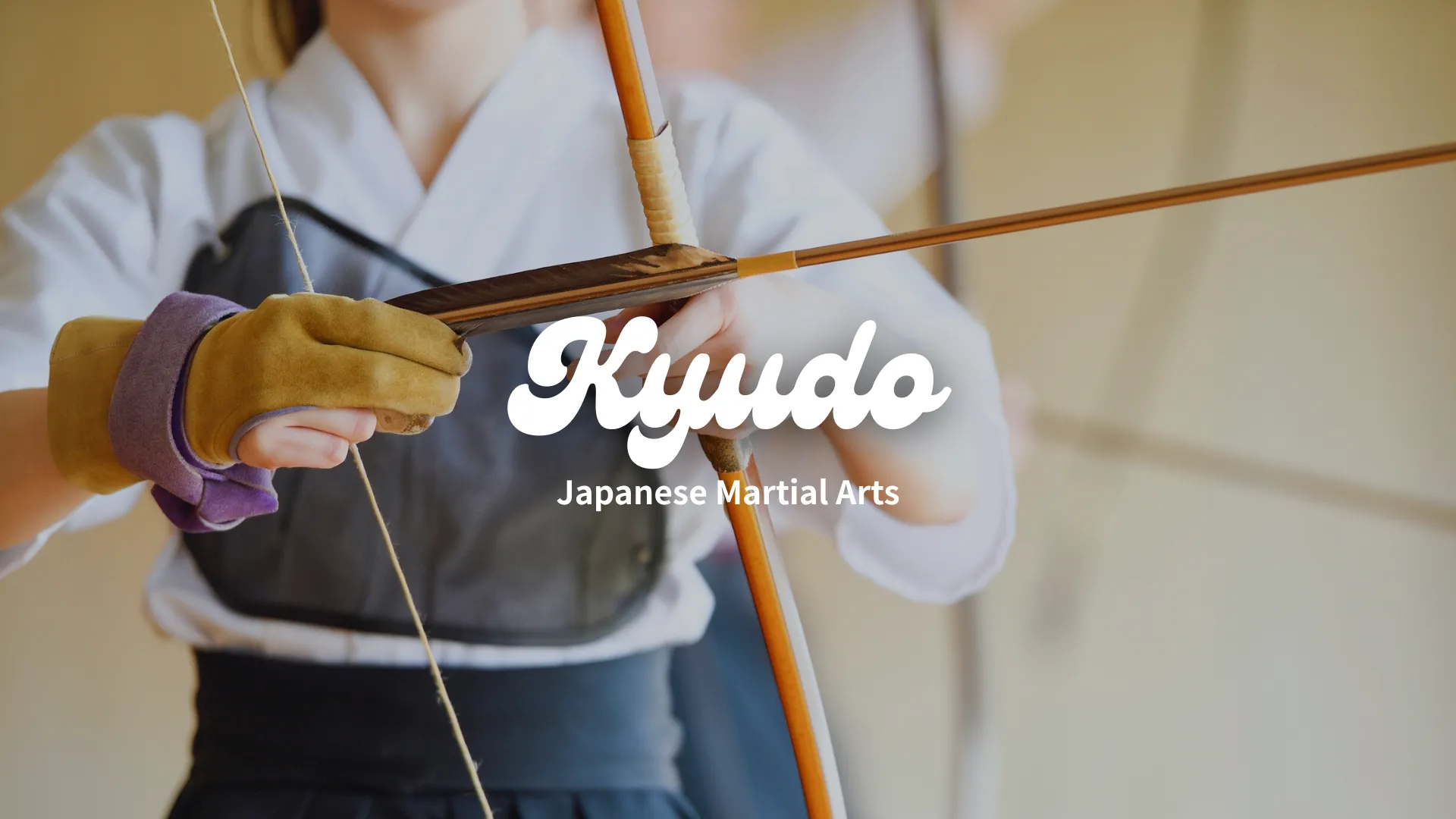
Kyudo is practiced using a traditional Japanese bow called a yumi, which is asymmetrical and significantly longer than Western bows. The grip is positioned below the center, a design that originated from mounted archery and remains a defining feature of Kyudo equipment. Arrows, known as ya, are traditionally made from bamboo, while the bowstring, tsuru, is carefully maintained and replaced regularly.
Unlike modern competitive archery, Kyudo does not prioritize speed or volume of shots. Each movement is deliberate and governed by a precise sequence of actions known as hassetsu, or the “eight stages of shooting.” These stages include posture, bow grip, raising the bow, drawing, full draw, release, follow-through, and remaining posture. Every stage must be executed correctly for the shot to be considered successful, regardless of whether the arrow hits the target.
Targets are typically placed at a distance of 28 meters in standard Kyudo practice. The target itself is secondary to the form of the archer. In formal settings, even a missed target can be regarded as a good shot if the archer’s posture, breathing, and mental state are correct. This perspective sharply contrasts with modern sport archery, where scoring accuracy is paramount.
Kyudo training places strong emphasis on posture and breathing. Practitioners stand upright with a relaxed yet grounded stance, aligning the body in a way that allows tension to distribute evenly. Drawing the bow requires coordinated movement of the entire body rather than arm strength alone. The release is not forced but occurs naturally when alignment, balance, and focus converge.
Training environments are quiet and disciplined. Kyudo is usually practiced in a dojo or a kyudojo, a dedicated archery hall that emphasizes calm and concentration. Silence is common during practice, reinforcing mindfulness and self-awareness. Corrections from instructors focus not only on physical technique but also on attitude, timing, and composure.
There are no weight classes, time limits, or aggressive sparring elements in Kyudo. Advancement is measured through rank examinations rather than competition results. These examinations evaluate posture, consistency, etiquette, and understanding of Kyudo principles. This system reinforces Kyudo’s identity as a lifelong discipline rather than a competitive sport.
Equipment care and etiquette are also integral to training. Practitioners learn how to handle the bow and arrows with respect, reflecting the belief that tools carry cultural and symbolic significance. Proper attire, typically including a keikogi and hakama, further reinforces discipline and tradition.
Kyudo Philosophy, Values, and Cultural Significance
Kyudo is deeply influenced by Zen Buddhism, Confucian ethics, and Shinto aesthetics. Together, these traditions shape Kyudo’s emphasis on inner calm, moral integrity, and harmony between body and mind. One of Kyudo’s most well-known principles is seisha seichu, often translated as “correct shooting is correct hitting.” This idea expresses the belief that accuracy is a natural outcome of proper form and mental alignment.
Respect is central to Kyudo practice. Every training session begins and ends with formal bows, acknowledging the dojo, instructors, and fellow practitioners. These rituals reinforce humility and awareness of one’s place within the training environment. Etiquette governs how equipment is handled, how practitioners move, and even how they wait their turn to shoot.
Kyudo also emphasizes patience and self-reflection. Progress is often slow, and practitioners may spend years refining basic posture and movement. This slow pace encourages introspection and acceptance, aligning Kyudo with broader Japanese cultural values that prioritize perseverance and long-term dedication.
Culturally, Kyudo occupies a unique space between martial art, spiritual practice, and aesthetic performance. Public demonstrations, ceremonial shootings, and shrine events highlight Kyudo’s ritual dimension. In some contexts, Kyudo is practiced not as a sport but as a form of moving meditation, where the act of shooting becomes a means of personal cultivation.
In modern Japan, Kyudo is practiced by students, professionals, and retirees alike. It is commonly offered in schools and universities, helping preserve traditional values while adapting to contemporary life. Internationally, Kyudo has gained followers who are drawn to its philosophical depth rather than competitive appeal.
Despite modernization, Kyudo remains highly conservative in its structure. Techniques, clothing, and terminology have changed little over time. This continuity allows Kyudo to function as a living cultural tradition, providing insight into Japanese concepts of beauty, discipline, and balance.
Conclusion
Kyudo is more than an archery discipline. It is a martial art rooted in Japanese history that emphasizes form, mindfulness, and inner harmony over competition. Through its techniques, training methods, and philosophical foundations, Kyudo reflects a uniquely Japanese approach to self-cultivation. As both a cultural tradition and a personal discipline, Kyudo continues to offer a profound model of how martial arts can shape character as much as physical skill.
CONTACT US
For studying Japanese in Japan, please contact us.