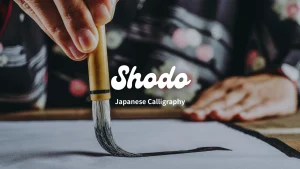
Explore Shodo in Japan, the traditional art of calligraphy, its history, techniques, tools, practice styles, philosophy, and cultural significance as the way of writing.
Want to learn Japanese in Japan? Ask any questions!
Apply with Travelife Japan to receive personalized guidance, application support, and a smoother enrollment experience.
What Is Shodo?
Shodo (書道), literally meaning “the way of writing,” is the traditional Japanese art of calligraphy. More than just beautiful handwriting, Shodo is considered a cultural and spiritual discipline that reflects aesthetic values, balance, and mindfulness. It uses brush and ink to create expressive characters in styles that can convey meaning, emotion, and artistic harmony. Shodo has been practiced in Japan for centuries and remains a deeply respected form of cultural expression.
The origins of Shodo can be traced back to ancient China, where brush calligraphy was developed long before it reached Japan. It was introduced to Japan around the 6th century alongside Chinese writing and Buddhism. Early Japanese calligraphers initially learned from Chinese models, but over time they developed uniquely Japanese styles using hiragana and mixed scripts.
Throughout Japanese history, calligraphy has evolved alongside changes in written language and cultural aesthetics. By the Heian period (794–1185), Japan had established its own distinctive calligraphic identity, with styles that emphasized flowing lines and poetic expression. Over subsequent centuries, Shodo became both a refined art and an essential part of education and artistic life in Japan.
Today, Shodo is practiced widely—from traditional tea houses and temples to schools and private studios—and continues to be seen not only as a visual art form but also as a way to cultivate discipline, focus, and artistic sensitivity.

Shodo Techniques, Tools, and Practice Style
Shodo is executed using a specific set of tools traditionally known as the Four Treasures of the Study: the brush (fude), ink (sumi), inkstone (suzuri), and paper (hanshi). These instruments have been used for centuries and are chosen for their ability to express subtle variations in line, texture, and tone.
Calligraphers begin by preparing ink, often by grinding an ink stick on the inkstone with water to create a rich black pigment. This process itself is considered part of the art, fostering a calm and intentional mindset. The brush is held vertically, and strokes are applied with careful control of pressure, speed, and rhythm to create elegant characters.
Shodo encompasses several major styles or scripts. Kaisho (standard script) is clear and formal, typically learned first by beginners. Gyosho (semi-cursive) introduces flowing connections between strokes, while Sosho (cursive) embraces expressive, abstract forms that prioritize the movement’s spirit over strict form.
Practice in Shodo involves repetition, posture, and breath control. Many practitioners sit in seiza (a traditional kneeling posture) or on a bench to maintain stability and focus. Each stroke must be executed with intention—there is no erasing or correction—making every brush movement both technical and expressive.
Shodo classes often begin with basic stroke exercises before progressing to entire characters and phrases. More advanced practitioners may create artistic compositions that blend kanji and kana, balancing line weight, spacing, and rhythm to convey aesthetic depth.
Shodo Philosophy, Values, and Cultural Significance
Shodo is deeply influenced by Zen Buddhism and Japanese aesthetic principles such as wabi-sabi, which find beauty in simplicity and imperfection. Practitioners believe that the quality of a stroke reflects the calligrapher’s state of mind—calm, focused, and present—and that discipline in practice leads to both artistic and personal growth.
Unlike Western calligraphy’s emphasis on uniform letterforms, Japanese calligraphy values expressiveness and the emotional resonance of each line. The act of writing is seen as a form of meditation, where the brush becomes an extension of the calligrapher’s spirit, capturing nuance and intention in every stroke.
Shodo also holds an enduring place in Japanese culture, from its role in traditional education to its presence in ceremonies, temples, and modern art exhibitions. Many Japanese people learn calligraphy in school or through community classes, and Shodo works are displayed in homes, tea rooms, and galleries as symbols of refinement and cultural continuity.
In contemporary Japan, Shodo continues to thrive both as a classical discipline and as a creative art form. Performance calligraphy, where artists create large-scale works in view of an audience, has emerged in recent decades, blending tradition with dynamic artistic expression.

Conclusion
Shodo is more than the art of writing beautiful characters. It is a traditional Japanese practice that combines aesthetics, mindfulness, and spiritual discipline. Through deliberate brush strokes and refined techniques, practitioners express inner focus and artistic intent. Rooted in centuries of cultural history and influenced by Zen principles, Shodo remains a meaningful and evolving part of Japan’s artistic heritage.
CONTACT US
For studying Japanese in Japan, please contact us.