What is Sumo wrestling? Learn about Sumo’s history, techniques, rules, training style, philosophy, and cultural significance as Japan’s traditional martial art.
Want to learn Japanese in Japan? Ask any questions!
Apply with Travelife Japan to receive personalized guidance, application support, and a smoother enrollment experience.
What Is Sumo?
Sumo is Japan’s traditional form of wrestling and one of the oldest continuously practiced martial arts in the world. With a history spanning more than 1,500 years, Sumo is not merely a competitive sport but a cultural practice deeply intertwined with religion, ritual, and social order. Its origins lie in ancient Japan, where physical contests were performed as part of Shinto ceremonies to entertain the gods and pray for good harvests.
In early agricultural society, strength and physical dominance were associated with divine favor. Ritualized wrestling matches were conducted at shrines as offerings to the kami, or Shinto deities. These early forms of Sumo were not standardized competitions but symbolic acts meant to restore balance between humans and nature. Over time, these rituals evolved into more structured contests, especially during the Nara and Heian periods, when Sumo became part of imperial court entertainment.
As Japan entered the medieval era, Sumo’s role shifted again. During the Kamakura period, the rise of the samurai class influenced many physical disciplines, and wrestling techniques were valued as practical training for close combat. Although Sumo was never a battlefield art in the same sense as swordsmanship, its emphasis on balance, posture, and explosive power aligned well with martial values of the time.
The Edo period marked a major turning point. Sumo transformed into a professional spectator sport, with organized tournaments, official rankings, and dedicated training stables. Wrestlers became public figures, and matches attracted large crowds in urban centers such as Edo, Osaka, and Kyoto. Many of the traditions seen today, including ceremonial attire and ranking systems, were formalized during this era.
Modern Sumo continues to be governed by the Japan Sumo Association, which strictly preserves its customs and structure. Professional wrestlers, known as rikishi, live and train in communal stables under a rigid hierarchical system. Despite the pressures of globalization and modern sports culture, Sumo has retained its traditional form, making it a rare example of a martial art that functions simultaneously as a competitive sport and a living cultural ritual.

Sumo Techniques, Rules, and Training Style
Sumo matches take place on a circular clay ring called a dohyo, measuring approximately 4.55 meters in diameter. The objective of a bout is deceptively simple: force the opponent out of the ring or cause any part of their body other than the soles of their feet to touch the ground. Matches often last only a few seconds, but the techniques and preparation behind them are highly sophisticated.
Winning techniques in Sumo are known as kimarite, and more than 80 are officially recognized. These techniques include pushing, thrusting, belt grips, throws, trips, and force-outs. Closed-fist punching, kicking, eye-gouging, and hair-pulling are strictly prohibited, ensuring that bouts rely on balance, leverage, and body control rather than striking. Success in Sumo depends on the ability to read the opponent’s movement and exploit even the smallest lapse in stability.
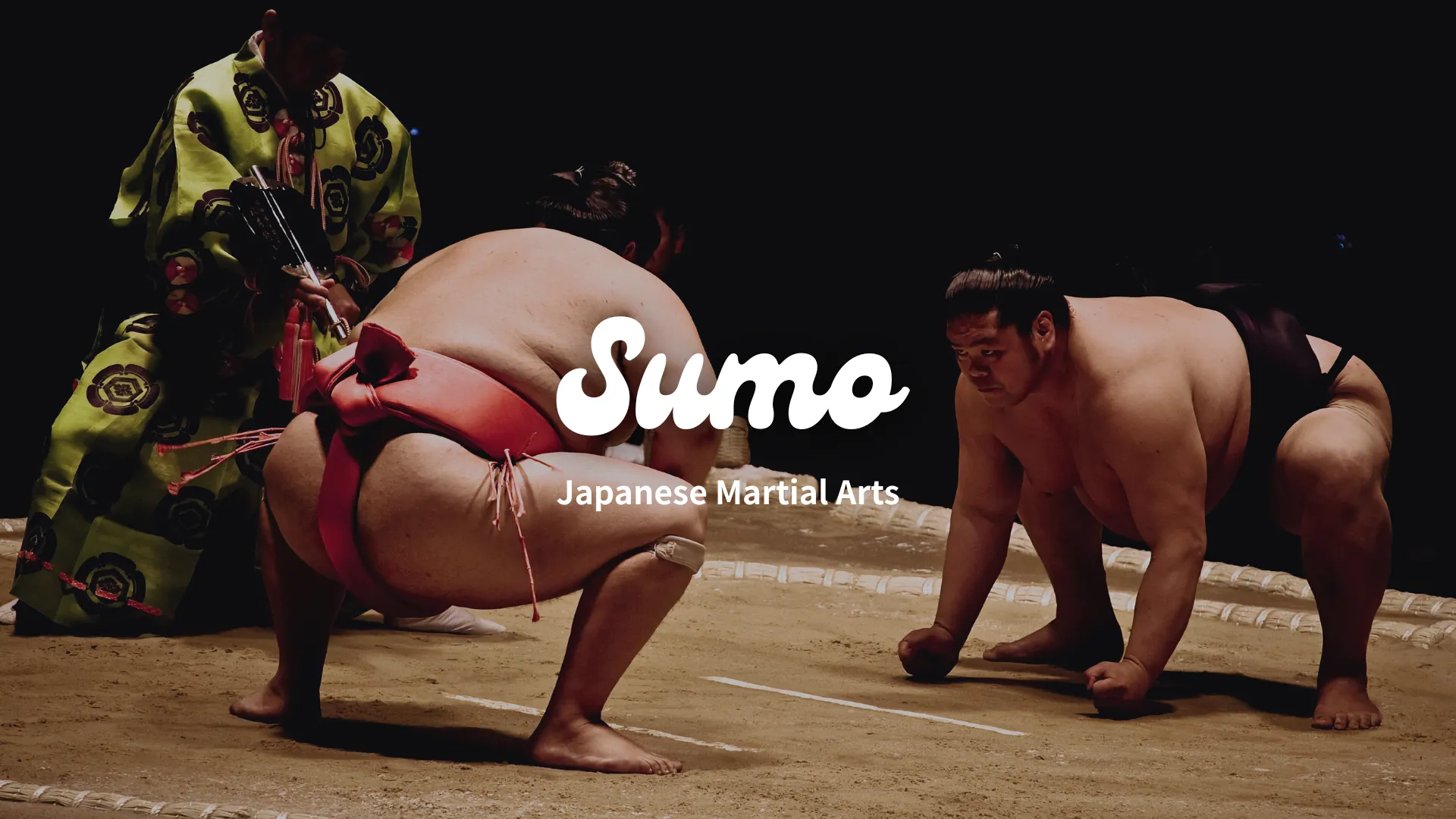
Each bout begins with a highly ritualized sequence. Wrestlers enter the ring wearing ceremonial aprons called kesho-mawashi, perform symbolic movements, and throw salt into the ring to purify the space. This purification ritual reflects Sumo’s Shinto roots and reinforces the idea that the dohyo is a sacred arena. Only after both wrestlers crouch, stare each other down, and place their fists on the ground does the match officially begin.
The initial clash, known as the tachiai, is often the decisive moment of the bout. Wrestlers launch themselves forward simultaneously, colliding with explosive force. From this instant, the match becomes a contest of momentum, positioning, and reaction speed. Even the slightest misstep can result in immediate defeat.
Training for Sumo is intense and highly traditional. Rikishi typically begin their day before sunrise with keiko, a demanding practice session that can last several hours. Training focuses on repetition and direct physical engagement rather than modern conditioning equipment. Wrestlers practice sparring, strength drills, and foundational movements that emphasize stability and power.
Two of the most iconic training exercises are shiko and suriashi. Shiko involves repeatedly lifting one leg high and stomping it down with force, strengthening the hips and legs while improving balance. Suriashi is a sliding footwork drill performed in a low stance, designed to maintain stability while moving forward and backward. These exercises highlight Sumo’s emphasis on grounded movement and lower-body control.
Diet and body composition play a critical role in Sumo training. Wrestlers aim to build mass while maintaining flexibility and endurance. The traditional meal chanko nabe, a hearty hot pot rich in protein and vegetables, supports muscle development and recovery. Contrary to popular stereotypes, professional Sumo wrestlers are highly conditioned athletes whose size is optimized for performance rather than appearance.
Rankings in professional Sumo are strictly merit-based. Wrestlers compete in six official tournaments each year, and their win-loss records determine promotion or demotion. This unforgiving system reinforces discipline and accountability, as even top-ranked wrestlers can quickly lose status after a poor performance.
Sumo Philosophy, Values, and Cultural Significance
Sumo’s philosophy is inseparable from its religious and cultural foundations. Rooted in Shinto beliefs, Sumo treats the ring as a sacred space, and many tournament elements resemble shrine rituals. The roof suspended above the dohyo mirrors the architecture of a Shinto shrine, reinforcing the ceremonial nature of each match.
Respect is one of Sumo’s core values. Wrestlers bow before and after bouts, acknowledging both their opponent and the sanctity of the ring. This respect extends into daily life within training stables, where seniority determines responsibilities and behavior. Younger wrestlers perform household duties and learn through observation, reinforcing humility and patience.
Discipline and endurance are central to Sumo culture. Rikishi often commit their entire lives to the sport, entering stables at a young age and adhering to strict rules governing diet, appearance, and conduct. This lifestyle reflects broader Japanese values that emphasize perseverance, hierarchy, and collective harmony.
Sumo also embodies traditional concepts of balance and order. The absence of weight classes places all responsibility on technique, timing, and mental composure. Wrestlers are expected to accept outcomes without protest, reinforcing personal accountability and respect for the rules. Matches are rarely disputed, underscoring the value placed on decisiveness and clarity.
Culturally, Sumo occupies a unique position in Japan. It is both a national symbol and a subject of ongoing debate, particularly as the sport navigates modernization and international participation. Wrestlers from outside Japan have achieved top ranks, demonstrating Sumo’s global appeal while also challenging long-held assumptions about identity and tradition.
Despite these changes, Sumo remains deeply conservative in structure and presentation. Rituals, attire, and training methods have changed little over centuries, allowing Sumo to function as a living expression of Japanese history. Through this continuity, Sumo provides insight into how martial arts can preserve cultural meaning while remaining relevant in the present day.

Conclusion
Sumo is far more than a form of wrestling. It is a martial art shaped by history, religion, and social values, combining explosive physical power with ritualized tradition. Through its techniques, training, and philosophy, Sumo reflects a uniquely Japanese approach to discipline, respect, and balance. As both a competitive sport and a cultural practice, Sumo continues to offer a rare example of how martial arts can function as living heritage rather than simply athletic performance.
CONTACT US
For studying Japanese in Japan, please contact us.